

KAIWEI fully automatic dispensing machines require the X-axis and Y-axis to perform linear and circular interpolation, while the Z-axis is mainly used for workstation position switching. They integrate five major subsystems—mechanical structure, power, sensing,
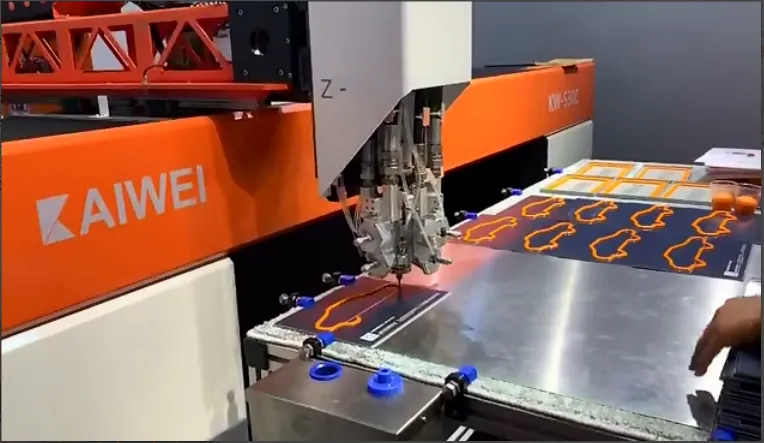
KAIWEI fully automatic dispensing machines require the X-axis and Y-axis to perform linear and circular interpolation, while the Z-axis is primarily used for workstation position switching. The equipment is an electrical automation system composed of five major subsystems: mechanical structure system, power system, sensing system, automated data analysis system, and actuator system. An electrical automation system refers to a system that introduces electronic information technology into the main functions, information processing, and control functions, organically integrating mechanical equipment, actuating components, computer systems, electronic hardware, and software. Under the control of electronic information technology, the automatic dispensing system combines machines, actuators, information processing, interfaces, and software from a systems-engineering perspective to form a new type of mechanical structure system. Specifically, a fully automatic dispensing machine consists of five subsystems: mechanical structure system (mechanism), automated data analysis system (computer system), power system (power source), sensing and detection system (sensors), and actuator system (such as motors).
In automatic dispensing machines, the X and Y axes are driven by AC servo motors to ensure accurate linear and circular interpolation, while the Z-axis is pneumatically actuated, primarily used for workstation position switching to adjust the spacing between the dispensing nozzle and the target surface, as well as executing CNC programs to complete dispensing on transmission front housings. To ensure optimal adjustment of the dispensing machine, the following design requirements must be met: 1. Mechanical structure design of the fully automatic spray/dispensing machine, including X/Y-axis servo drive systems and Z-axis pneumatic cylinder drive system; 2. Glue supply system design for the automatic dispensing machine, including dispensing gun and actuating cylinder design; 3. Fixture design for the automatic dispensing machine; 4. Simplified CNC system design for the automatic dispensing machine; 5. The automatic dispensing machine must support multi-directional X/Y-axis motion, requiring not only straight-line movement but also high-precision interpolation motion.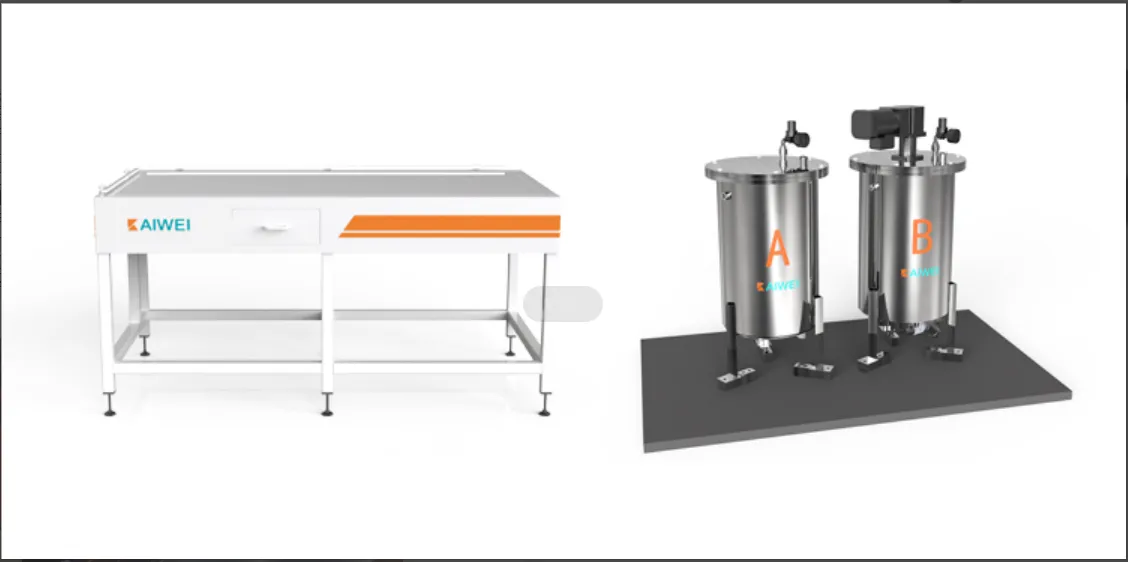
- Structure and Functions of Automatic Dispensing Equipment
Technical specifications, document scope and sealing performance require project-specific review and sample validation with KAIWEI engineering.
Equipment information Documentation scopeNext step
Discuss your part with KAIWEI
Share the drawing, material and target output for an application review.
Request an application review