

What are the characteristics and classifications of dispensing machines? With the rapid development of modern manufacturing, dispensing machine equipment is increasingly applied across industries, making the classification of dispensing machines as automated mechanical equipment especially important.
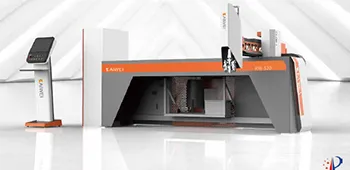
With the rapid development of modern manufacturing, dispensing machines are increasingly used in electronics, lighting, automotive, industrial electrical, and construction engineering sectors. Unlike traditional manual gluing methods, automatic dispensing machines deliver higher work efficiency while ensuring dispensing accuracy and consistent product quality. The advantages of automatic dispensing machines over manual foaming are obvious: automated foam dispensing is accurate and fast, eliminating material waste; bead quality is stable and aesthetically pleasing; and replacing manual labor with machinery effectively reduces production and labor costs to achieve lean production. How are dispensing machines classified as automated mechanical equipment?
Category I: General-Purpose Dispensing Machines
1. Controller-type dispensing machines: including automatic dispensing machines, quantitative dispensing machines, semi-automatic dispensing machines, digital-display dispensing machines, and precision dispensing machines.
2. Desktop dispensing machines: including benchtop dispensing machines, benchtop 3-axis dispensing machines, benchtop 4-axis dispensing machines, desktop automatic dispensing machines, 3-axis inline dispensing machines, multi-head dispensing machines, multi-nozzle dispensing machines, circular dispensing machines, rotary dispensing machines, speaker dispensing machines, keypad dispensing machines, and enclosure dispensing machines.
3. Semi-automatic dispensing machines: including microcomputer precision dispensing machines, LED digital-display dispensing machines, automatic suck-back dispensing machines, and DIP-switch cycle dispensing machines.
Category II: Automatic Dispensing Machines
1. Floor-standing two-component dispensing machines.
2. Spray-type automatic dispensing machines (using spray valves for inline operation, mainly for PCB conformal coating to provide dustproof, moisture-proof, and insulating protection).
3. Conductive adhesive automatic dispensing machines (distinguished from ordinary dispensing machines by a triangular cross-section profile of the dispensed conductive adhesive, mainly used for EMI shielding dispensing).
4. Phosphor jetting dispensing machines (mainly used in the LED industry).
Category III: Dual-Y-Axis COG Dispensing Machines
This type of dispensing machine includes two motion platforms, whereas conventional dispensing machines generally have only one. Each motion platform can typically be equipped with 5 or more dispensing heads, achieving a dramatic leap in dispensing efficiency. They are suitable for precision dispensing on LCD and liquid crystal modules, and are widely used in mobile phone LCD screens, PDAs, and similar display panels. Category IV: Non-standard customized machines, tailored to special customer product process requirements, which generally involve higher development costs.
The above is an introduction to the characteristics and classifications of dispensing machines, which we hope will be helpful to you.
KAIWEI dispensing machines are suitable for a wide variety of industrial fields and have already provided sealing solutions for many domestic companies, saving enterprises significant labor and time costs.

KAIWEI HT-3xx and HT-4xx foam dispensing equipment operate at a speed of 6-12m/min, with a daily output of around 3000m, meeting all factory foam dispensing requirements. Based on a standard 15mm-wide gasket weighing 25g per 1m length and a domestic raw material price of RMB 35/kg, the material cost per meter is 1m * 25g * RMB 35/kg / 1000 = RMB 0.875/m. In IP ingress protection tests, enclosures or other sealed products using foamed gaskets can achieve IP67 or even higher (IP68, where the first digit indicates dust protection and the second indicates water protection), delivering ideal sealing performance. The standard configuration of KAIWEI HT-3xx and HT-4xx foam dispensing equipment features 6-axis full-servo control (Panasonic servos) and a module-2 helical rack drive, supporting continuous 7*12h operation even on high-demand assembly lines.

#Let the World Fall in Love with Intelligent Manufacturing in China#
Multiple new models are now open for pre-order. Please call or visit our factory for inquiries.
Service Hotline: 400-8398-006
Shanghai Kaiwei Intelligent Technology (Group) Co., Ltd.
Tel: 021-51827665
Fax: 021-59843899
Website (Http): www.kaiwei-sh.com
E-mail: webmaster@kaiwei-sh.com
Address (Add): No. 336, Lane 399, Kangyuan Road, Zhujiajiao Industrial Zone, Qingpu District, Shanghai

- Dispensing Machine Characteristics Classification
Technical specifications, document scope and sealing performance require project-specific review and sample validation with KAIWEI engineering.
Equipment information Documentation scopeNext step
Discuss your part with KAIWEI
Share the drawing, material and target output for an application review.
Request an application review